Regolith simulants are simulated materials developed from terrestrial rocks and minerals to reproduce the soil found on the surfaces of celestial bodies. By carefully selecting and processing source materials, these simulants replicate the physical and chemical characteristics of regolith observed on various celestial bodies.
The Miyamoto Laboratory develops simulants representing the surface environments of multiple planetary bodies, including the Moon, Mars, and Phobos.
Lunar Regolith Simulants (UTLS Series)
The lunar regolith simulants developed in our laboratory (UTLS series) reproduce the chemical and physical properties of lunar regolith using carefully selected terrestrial materials whose grain size and texture resemble those of minerals present in lunar soils.
In particular, these simulants are produced by mixing a wide range of materials in proportions determined through a rigorous optimization procedure. This approach enables high-fidelity reproduction of the chemical compositions observed across diverse lunar regions, from low latitudes to the polar areas.
In addition, proprietary crushing techniques are used to reproduce the particle morphology of lunar regolith. As a result, mechanical properties such as bulk density and angle of repose fall within ranges expected for the lunar surface.
The UTLS simulants are widely used in experimental studies and engineering tests worldwide, including validation experiments for exploration missions such as LUPEX and TSUKIMI, as well as laboratory studies related to in-situ resource utilization (ISRU).
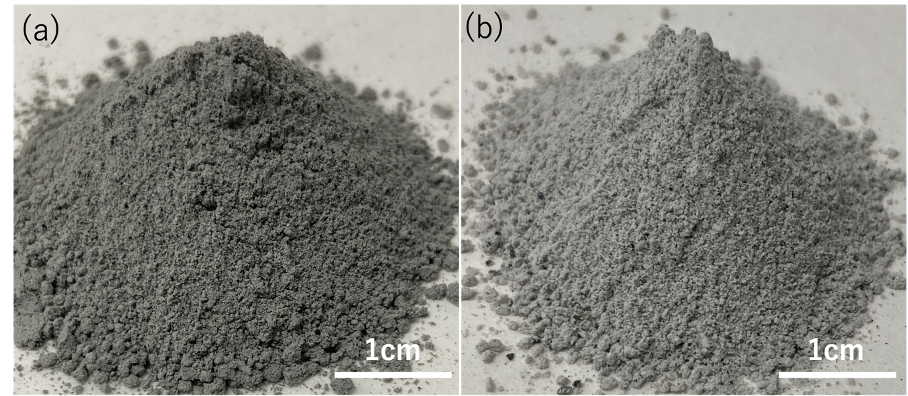
Figure 1-1. (a) UTLS-M1, representing lunar mare regions, and (b) UTLS-H1, representing lunar highlands.
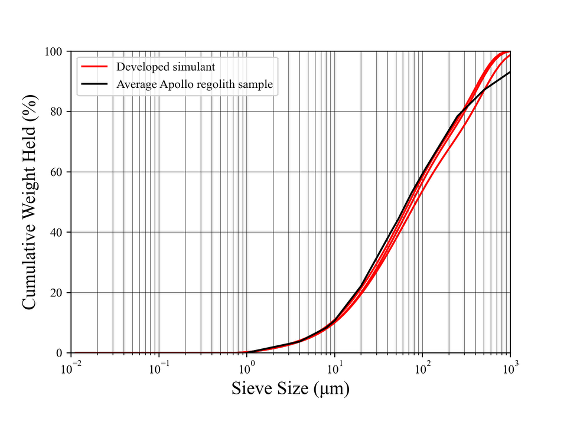
Figure 1-2. Average particle size distribution estimated from Apollo samples (black line) and the particle size distribution of the lunar simulant adjusted to match it (red line).
Table 1-1. Chemical compositions of UTLS-M1 (mare analog) and UTLS-H1 (highland analog).
| SiO2 (wt%) | TiO2 (wt%) | Al2O3 (wt%) | FeO (wt%) | MnO (wt%) | MgO (wt%) | CaO (wt%) | Na2O (wt%) | K2O (wt%) | P2O5 (wt%) | Total | |
| UTLS-M1 | 47.7 | 1.15 | 18.9 | 9.27 | 0.13 | 7.97 | 10.2 | 1.90 | 0.56 | 0.08 | 97.9 |
| UTLS-H1 | 44.6 | 1.32 | 25.0 | 6.61 | 0.07 | 5.30 | 12.9 | 1.76 | 0.30 | 0.02 | 97.9 |
Martian Regolith Simulant (UTMS Series)
The Martian regolith simulants developed in our laboratory (UTMS series) reproduce the compositional diversity of Martian surface materials by combining a variety of terrestrial source materials. Martian regolith is known to vary significantly from region to region, reflecting differences in geological environment and surface processes.
To reproduce this diversity, the composition of the simulants is determined by integrating observational constraints from both landed missions and orbital measurements. By selecting appropriate source materials and optimizing their mixing ratios, the chemical compositions characteristic of different Martian regions can be reproduced with high fidelity.
In addition, the particle size distributions of the simulants are designed to fall within scientifically plausible ranges based on estimates of the thermophysical properties of the Martian surface. This allows the simulants to realistically represent the physical characteristics of Martian regolith.
These simulants are expected to be used in ground-based testing for evaluating the thermophysical behavior and penetration characteristics of instruments intended for planetary exploration missions. They are also anticipated to support a wide range of future Mars exploration activities both in Japan and internationally.
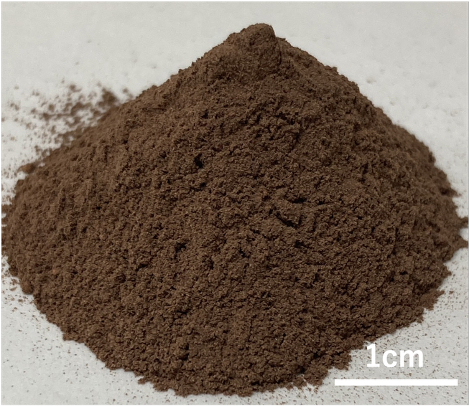
Figure 2-1. UTMS-G1, a simulant representing the surface composition of Gale Crater on Mars.
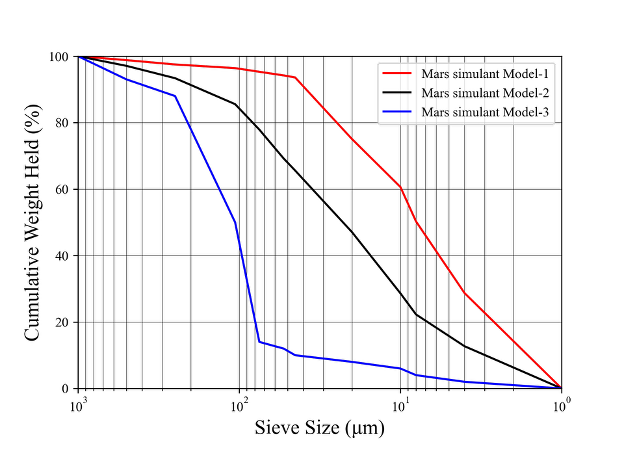
Figure 2-2. Three particle size distributions of UTMS-G1 prepared to represent regions with different abundances of fine dust.
Phobos Regolith Simulants (UTPS Series)
The Phobos regolith simulants developed in our laboratory (UTPS series) aim to realistically reproduce the surface regolith of Phobos, whose physical and chemical properties remain largely unknown due to the absence of landed exploration.
These simulants are constructed based on orbital observational data. Materials are selected according to two major hypotheses regarding the origin of Phobos: the giant-impact scenario and the capture scenario. Using these material sets, simulants are produced that reproduce the reflectance spectral characteristics consistent with remote-sensing observations.
Furthermore, the particle size distributions of the simulants are constrained using information from ground-based radar observations and thermal inertia measurements obtained from spacecraft observations.
These simulants represent a pioneering effort to construct realistic planetary surface materials based solely on pre-landing observational data. They are currently used in a wide range of experiments, including engineering validation tests of landing legs, sampling mechanisms, and rovers for the Martian Moons eXploration (MMX) mission, as well as various laboratory studies.
For more detailed information on the UTPS series, please refer to the following publication:
Miyamoto, H., Niihara, T., Wada, K., Ogawa, K., Senshu, H., Michel, P. et al. (2021). Surface environment of Phobos and Phobos simulant UTPS. Earth, Planets and Space, 73, 214. https://doi.org/10.1186/s40623-021-01406-3
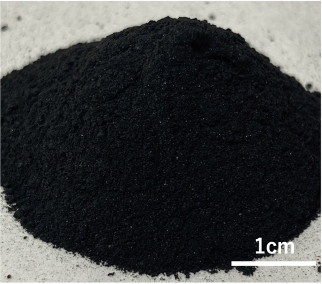
Figure 3-1. UTPS-TB, a simulant representing Phobos surface regolith based on the capture scenario.
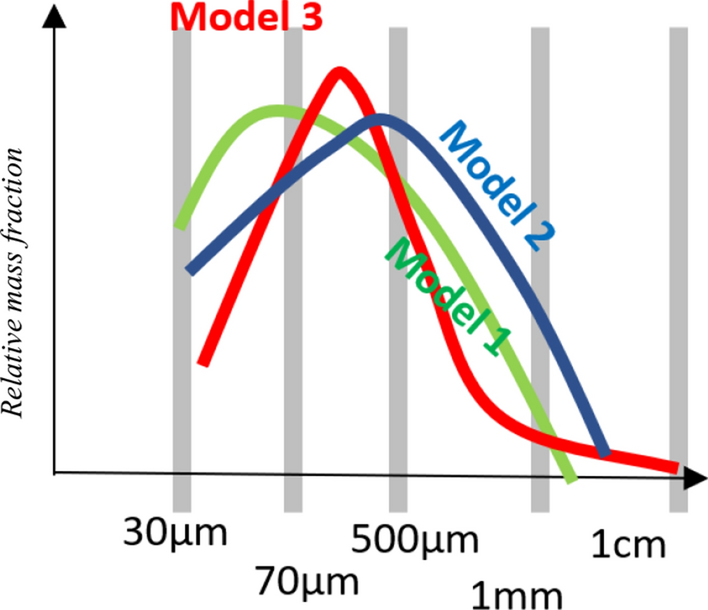
Figure 3-2. Three particle size distributions of UTPS-TB prepared for different formation scenarios (Miyamoto et al., 2021).
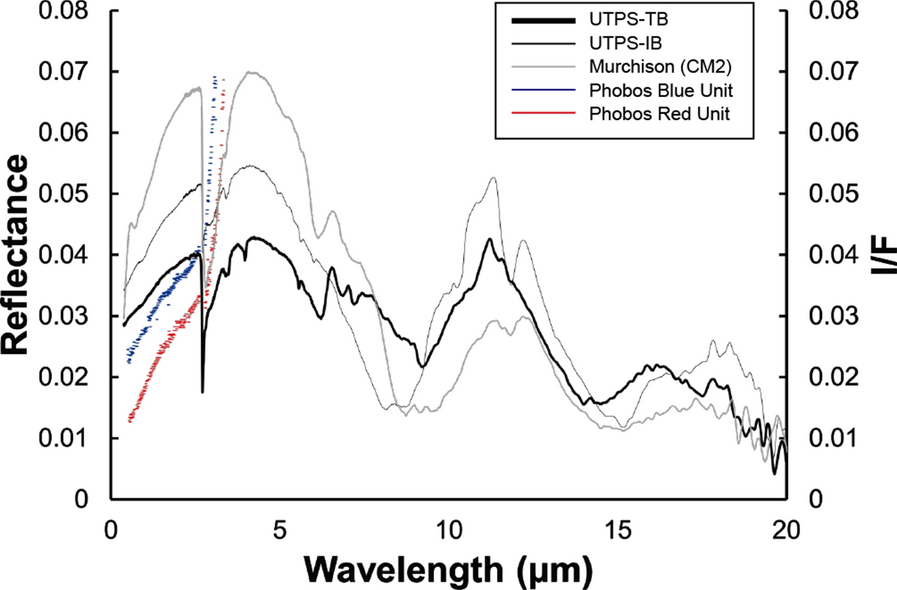
Figure 3-3. Reflectance spectra of UTPS-TB reproducing the I/F spectral characteristics observed for Phobos (Miyamoto et al., 2021).
Availability
These simulants are available to companies, researchers, educational institutions, and organizations either free of charge or for a fee, depending on the purpose of use.
Those interested in obtaining the materials are encouraged to consult the Request for Simulant Distribution page for further information.