Read images of other worlds. Measure their materials in the laboratory. Use instruments and models to understand the surfaces of the Moon and Martian moons. Our research brings together exploration data, experiments and numerical modelling, from planetary science to the use of space resources.
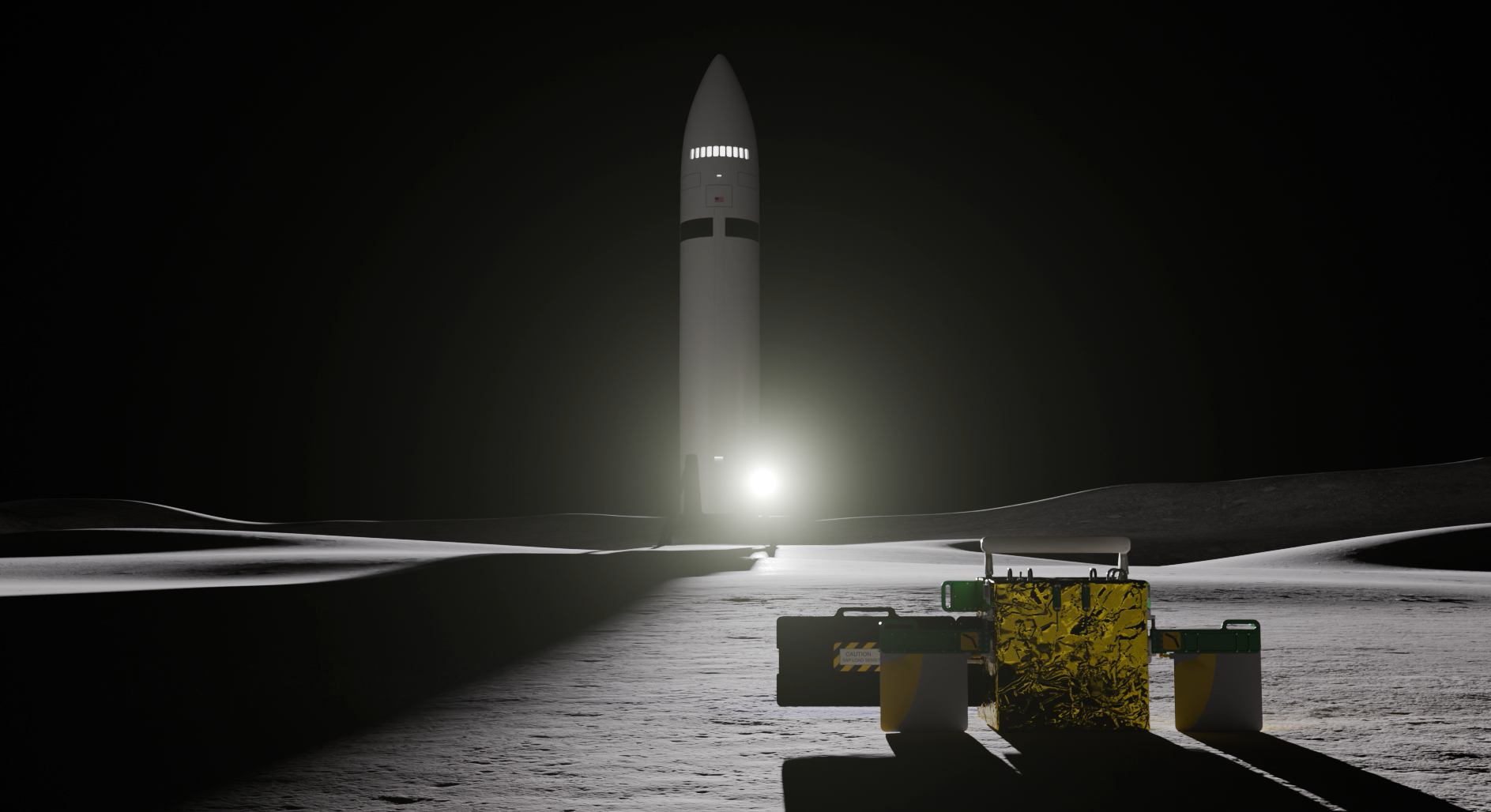
LDA: an astronaut-deployed instrument for Artemis
Artemis aims to return astronauts to the Moon’s surface for the first time since Apollo, more than half a century ago. The Lunar Dielectric Analyzer (LDA) is being developed as a science instrument for astronauts to carry to the Moon and deploy on its surface.
In March 2024, LDA was selected as one of NASA’s first three astronaut-deployed instruments through a global call. Among those three, it is the only one led by an institution outside the United States. Hideaki Miyamoto (PI) leads the University of Tokyo-based international team, working with Makito Kobayashi (Deputy PI) under a direct contract with NASA.
NASA selection announcement (26 March 2024) ↗ / University of Tokyo announcement (4 April 2024) ↗
The Lunar Dielectric Analyzer (LDA) is designed to measure the dielectric properties of lunar regolith, the loose grains and rock fragments covering the surface. Sensors placed against the ground probe how the material responds to electromagnetic fields.
Composition, packing density, temperature and ice can all affect dielectric properties. We combine measurements of analog materials with heat-transfer models to distinguish possible explanations for a signal. The observing concept also considers repeated measurements during temperature changes caused by a lander’s moving shadow.
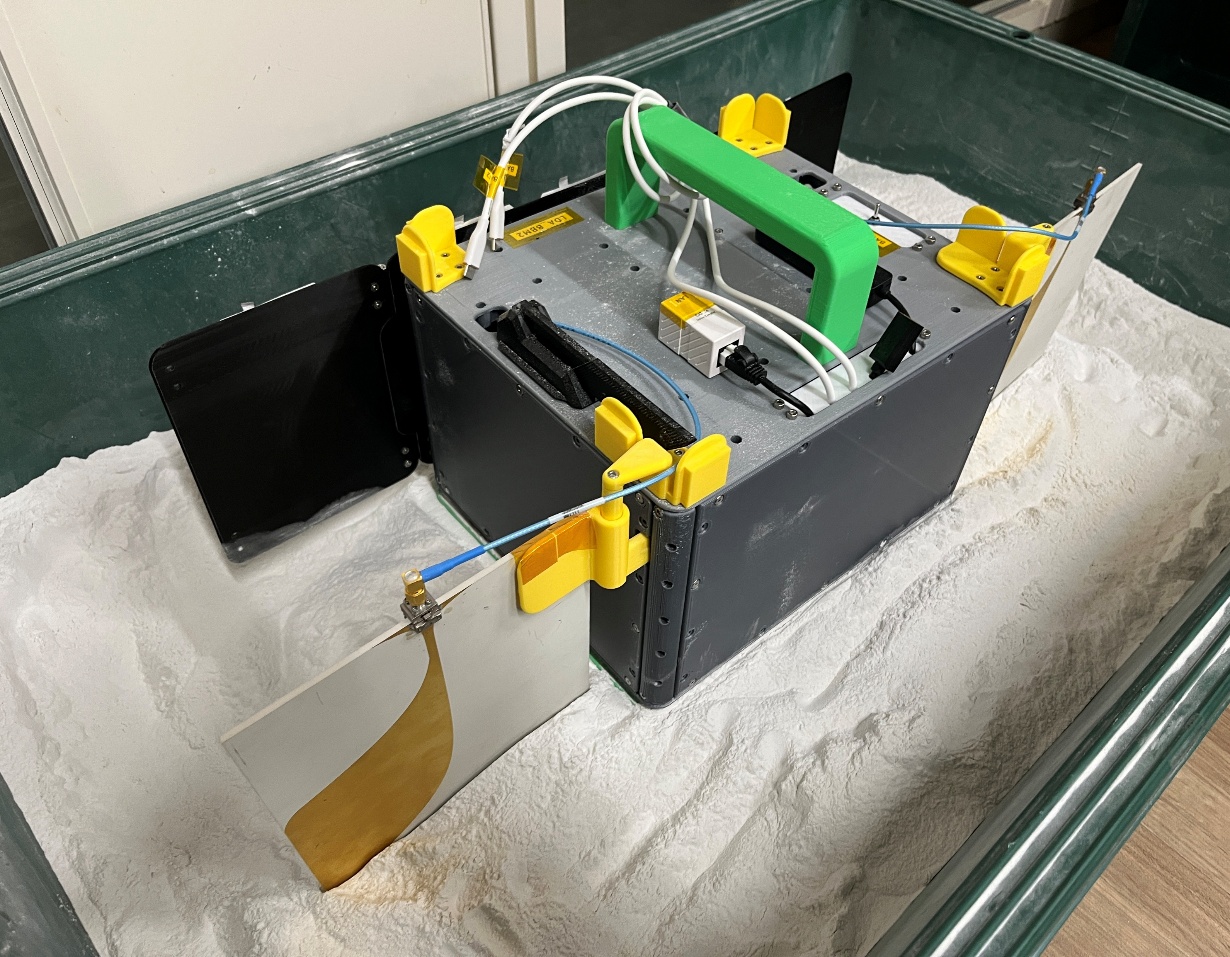
Connecting measurements, experiments and models
- Investigating measurements with contact resonators and antennas.
- Laboratory measurements across different sample compositions, densities and temperatures.
- Modelling surface heating and cooling to support the interpretation of field measurements.
LDA measurement strategy and instrument design (LPSC 2026) ↗ / Crew deployment and concept of operations (LPSC 2026) ↗
Leading lunar resource development: the SX R&D programme
Hideaki Miyamoto is Principal Investigator of the University of Tokyo-led centre for lunar space-resource development, selected under JAXA’s Space Strategy Fund SX programme. The funding ceiling is ¥3.18 billion for the centre’s entire programme, including shared research infrastructure funding.
* Subject to change following stage-gate reviews and other assessments.
The programme links resource exploration, collection, extraction, storage and use, alongside technology demonstrations, industry collaboration and education.
The centre has also been selected for additional support to develop low-gravity environments and shared demonstration infrastructure.
University announcement ↗ / JAXA programme overview ↗ / JAXA selection results for additional infrastructure support ↗ (Japanese)
RESEARCH HIGHLIGHT — MMX
Exploring the origins and evolution of Mars’s moons: MMX
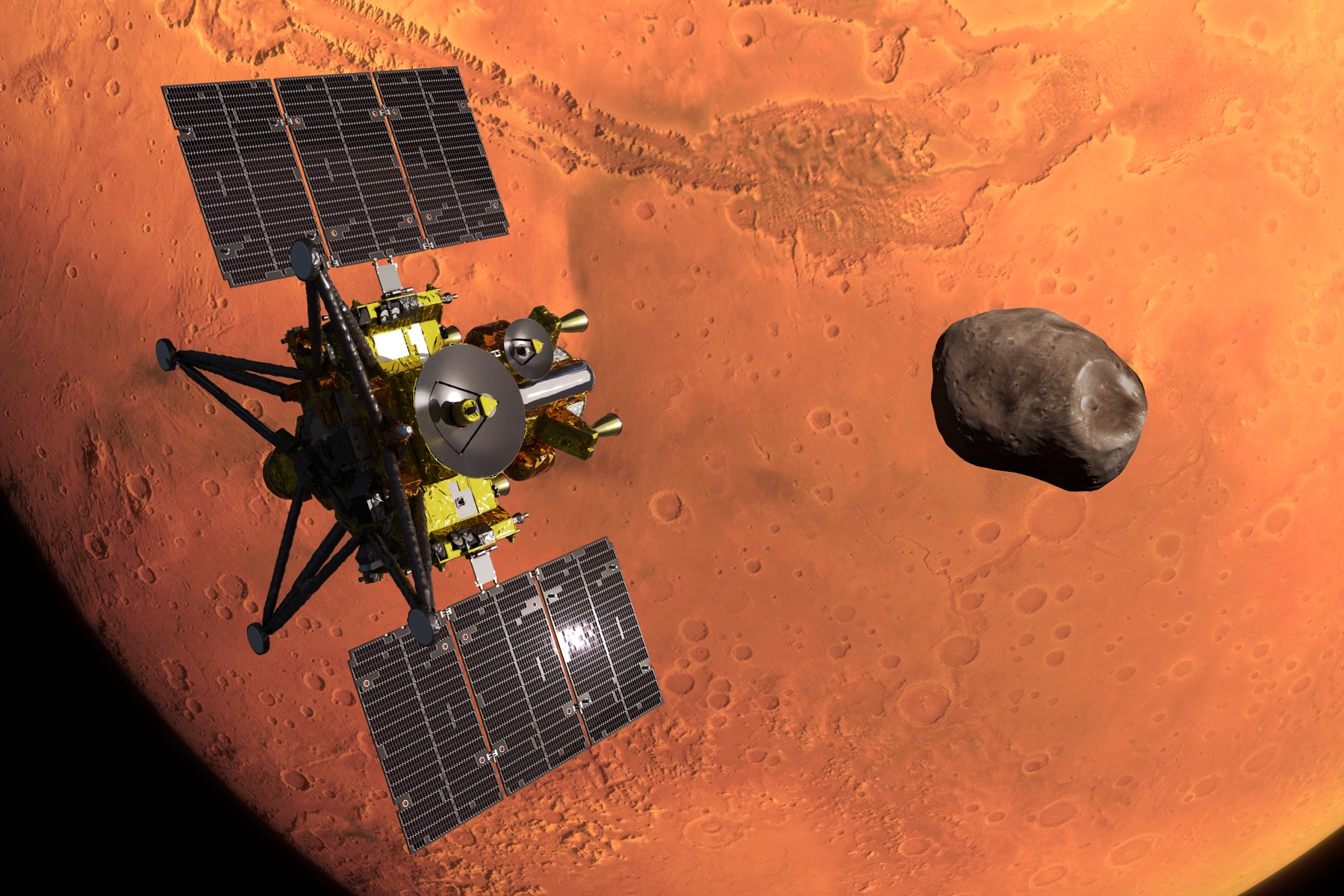
Hideaki Miyamoto is a founding member of the Martian Moons eXploration (MMX) mission, contributing from its early concept phase and co-drafting its scientific mission in 2015. He serves on the MMX Science Board and is PI of the Surface Science and Geology Science subteam (SSG-SST).
How did Phobos and Deimos form, and how have their surfaces evolved in the environment around Mars? We combine geological analysis of exploration images with experiments and numerical modelling to investigate these questions.
Supporting exploration with Phobos simulants
We developed UTPS (University of Tokyo Phobos Simulant) to support scientific and engineering studies for MMX. Laboratory studies of grain properties and light scattering help evaluate landing and sampling operations and interpret observations.
Students in our laboratory also participate in MMX research. Faculty, researchers and students work together on the exploration of Mars’s moons.
Selected MMX papers and overview
Miyamoto et al. (2021): Surface environment of Phobos and Phobos simulant UTPS ↗
Earth, Planets and Space 73, 214.
Miyamoto (2023): MMX surface science and geology overview (Japanese) ↗
Yuseijin 32(4), 296–301. Mission development and the differences between Martian moons and asteroids.
Wargnier et al. (2024; co-author Miyamoto): Spectro-photometry of Phobos simulants ↗
Icarus. Detectability of hydrated-mineral and organic absorption bands.
Representing planetary materials on Earth
Lunar, Martian and Phobos simulants are available for purchase and supply. Contact us with your intended use and required quantity for instrument testing, resource-utilisation experiments, education or exhibitions.
Regolith simulants representing the Moon, Mars and Phobos support experiments for exploration instruments and resource use. Alongside composition and grain characteristics, a central question is which properties must be reproduced to answer a particular experimental question.
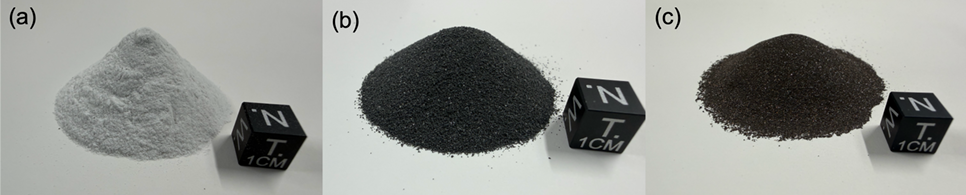
Studies supporting LDA compare the dielectric properties of materials including anorthosite, basalt and ilmenite. Controlled experiments help establish how composition and density are reflected in measurements.
Reconstructing planetary history from exploration images
We examine craters, boulders, grooves and other features in images of the Moon, asteroids and Martian moons. Their shapes, sizes and spatial distributions provide clues to impacts, particle movement and surface evolution.
Image analysis and machine learning are also topics in our research and teaching. Working with exploration data includes checking automatically extracted features against geological interpretation and assessing where a method succeeds or fails.
AI analysis of sediment and rock particles
Our machine-learning methods identify particle outlines in images and quantify size, shape and spatial distributions. Developed for exploration data, this technology also has applications in aggregate management, mining, civil engineering, construction and disaster-risk reduction.
Analysis of Ryugu and Bennu images identified about 3.5 million rock detections, yielding approximately 200,000 distinct rocks after duplicate removal. We welcome enquiries about adopting the analysis methods and developing applications through joint research.
From subsurface exploration to resource use and society
We also study radio sounding and subsurface radar methods for investigating structures hidden below the surface. Through CSRI and collaborations in Japan and overseas, we connect scientific and engineering work with resource-use questions, education and dialogue with society.